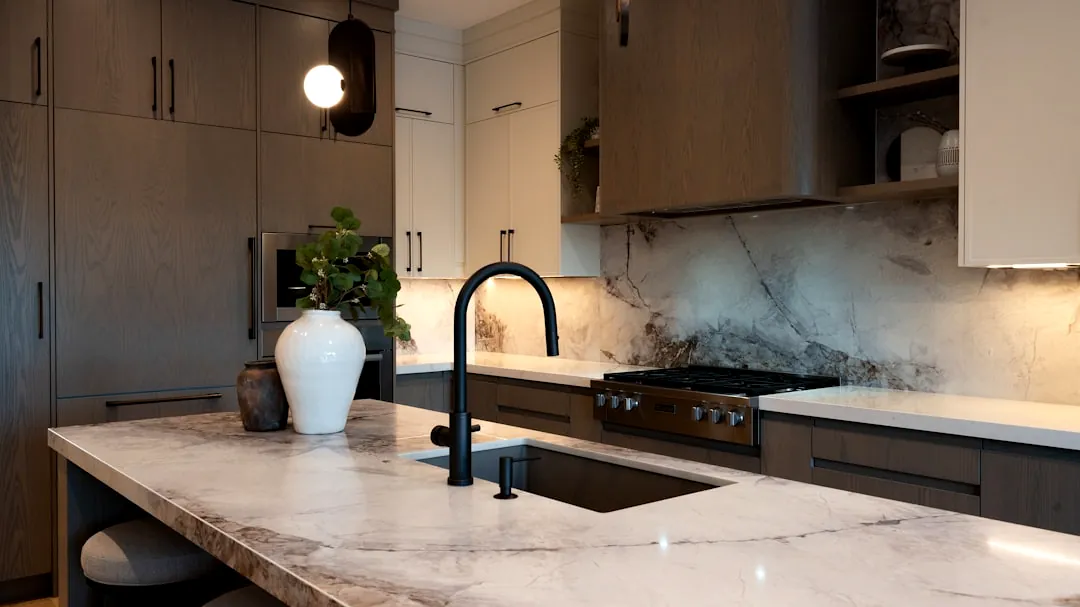
Richly colored, boldly veined marble—think Calacatta Viola and Verde Alpi—is the defining kitchen move of 2025. These stones turn countertops, waterfall islands and full-height backsplashes into intentional, warm focal points, but they also demand professional installation and more maintenance than engineered surfaces.
How the look has shifted and where you’ll see it
Designers are moving away from the low-contrast white marbles of recent decades and installing jewel-toned slabs as statement elements: waterfall islands, full-height backsplashes, and even vent hoods. Stones like Calacatta Viola (purple veining) and Verde Alpi (deep green) are being chosen specifically for their dramatic, directional veins rather than as subtle background material.
This isn’t about covering every surface in marble. Builders and custom designers in 2025 are more often reserving richly colored slabs for single, planned focal points so the pattern reads as art—paired with muted cabinetry or a warm wood island to keep the space from feeling cold or nightclub-like.
Material pairings, finishes and the visual mechanics

Making bold marble feel lived-in relies on mixes of texture and warmth: walnut cabinetry, brushed-bronze hardware, matte metals, and soft earth-toned paint temper vivid veining and create visual balance. Honed finishes are specifically recommended for high-use countertops because they reduce glare and hide minor etches better than polished surfaces; that finish decision changes both the look and how marks age over time.
Bookmatching—cutting two slabs to mirror each other—is a common design choice when homeowners want maximum visual drama, but it increases both material waste and installation complexity. Because slabs are heavy and fragile, bookmatched installations almost always require professional installers and sometimes structural reinforcement, which is why custom builders flag bookmatching as a premium option rather than a default.
Budgeting, installation demands and resale considerations
Richly colored marbles usually sit in a higher cost tier due to rarity and quarrying limits. They can boost resale appeal—real estate professionals say a well-executed marble kitchen often accelerates buyer interest—but the premium only pays off when workmanship is high and the stone is installed with intention (bookmatching, continuous veining across a waterfall edge, tight seams).
| Stone / Finish | Typical Use | Cost Tier | Installation & Support | Maintenance Notes |
|---|---|---|---|---|
| Calacatta Viola | Countertops, waterfall islands, backsplashes | High | Fragile slabs; bookmatching common; pro installers recommended | Sealing frequently; honed to hide etches |
| Verde Alpi | Accent islands, backsplashes | High–Very High (rare) | May require structural support for large slabs; pro handling advised | Prone to visible veining stains; regular sealing advised |
| Honed vs Polished finish | Countertop finish choice | N/A | Honed can mask wear; polished shows pattern but highlights etches | Honed reduces visible etching; both need regular sealing |
Maintenance thresholds and when to rethink the choice
Marble is porous and softer than granite or quartz: acidic spills etch, and abrasive scrubbing worsens wear. Expect regular sealing—many designers recommend every 6–12 months for daily-use counters, and spot-seal after heavy cooking sessions with citrus or wine. If you’re not willing to reseal on that cadence, or you have a household with frequent rough use, marble may be a poor fit.
Stop signals: persistent staining despite sealing, inability to hire experienced stone installers, or a renovation budget that can’t absorb the premium for bookmatching and structural work. Proceeding anyway usually means limiting marble to low-contact vertical surfaces (backsplashes, hood cladding) rather than primary prep areas.
Quick homeowner questions
Is bold marble suitable for a family kitchen? Yes, if you commit to honed finishes, routine sealing (6–12 months), and accept some patina over time; otherwise choose marble for accents only.
How soon should I book installers? For premium slabs and any bookmatched work, schedule experienced stone fabricators and structural assessment as early in the design phase as possible—often 8–12 weeks before intended install.
Will marble add resale value? It can. Real estate agents report stronger buyer interest for well-executed marble kitchens, but the value hinges on craftsmanship and whether the marble fits the home’s overall market; poor installation can erase the premium.