Emily Henderson’s primary bedroom update is less a one‑day style reveal and more a sequence of condition‑driven choices: bright daylight made a medium blue‑gray feel too intense, furniture delivery schedules forced live testing of scale, and an eight‑foot addition transformed a cosmetic project into a complex renovation with real budget and systems consequences.
Why Debonaire felt wrong in morning sun (and why repainting was declined)
The room was painted in a medium blue‑gray called Debonaire, but high amounts of natural light—orientation and large new windows—pushed that tone toward something more saturated than intended. Emily considered switching to a softer Eventide powder blue, but a professional repaint was estimated at about $6,000 and three days of disturbance; the cost and disruption were judged greater than the incremental comfort gain.
This is a common threshold homeowners face: when a color reads too strong in place, the decision to repaint depends not just on taste but on disruption, time, and explicit cost. In this project the team kept Debonaire and adjusted other variables (fabrics, window treatments, lighting) rather than trigger the $6k repaint.
How bed scale and fabric shifted the room’s feel
Furniture scale changed the room more visibly than paint. A custom bed intended for another room was used temporarily while a caramel velvet bed was delayed; Emily ultimately chose a rose linen slipcovered bed from Anthropologie because its profile and texture better suited the expanded room. That swap illustrates a practical mechanism: texture and headboard height can soften a color problem without repainting.
Practical follow‑ups remain: the bed’s low height versus the tall fireplace created balance questions, and nightstand dimensions and rug placement are flagged as the next checkpoints that will further define comfort and circulation in the suite.
How an eight‑foot addition converted a paint fix into a $75k scope change
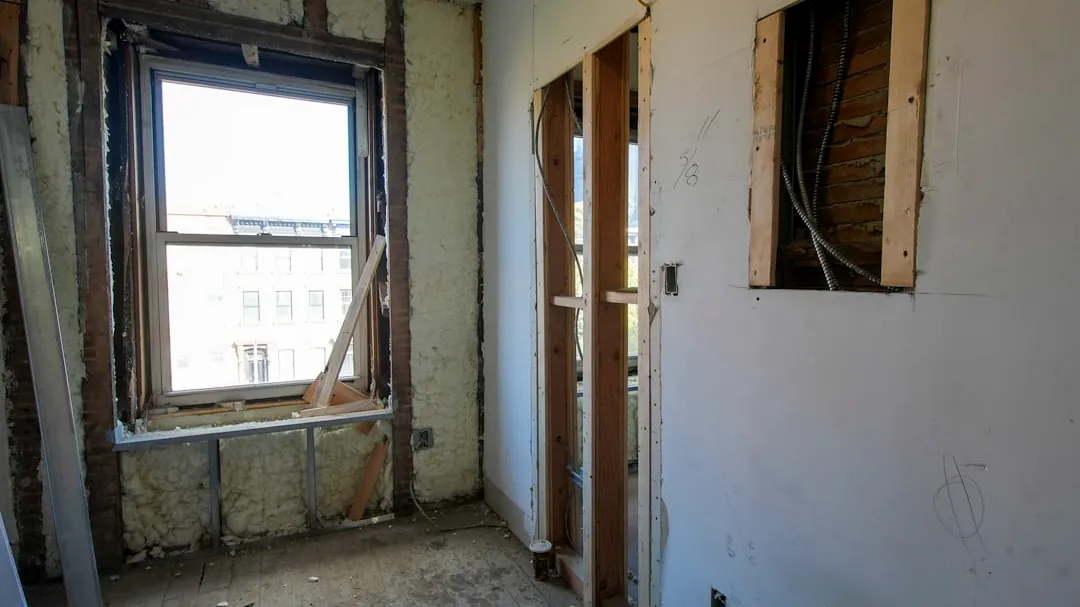
The bedroom sits on an eight‑foot addition to a 1960s wing—foundation, new roofing, extended HVAC runs, and updated electrical were required. Emily estimates that expansion added roughly $75,000 to the renovation budget. That number reflects more than floor area: it buys new systems, permits, and coordination across trades, and it makes small aesthetic decisions cascade into mechanical and schedule complexity.
That extra scope also had a deliberate origin: the family wanted a suite more like their mountain house and room for a mudroom to manage Oregon weather and pets. The longer paragraph here underscores a trade‑off: the addition granted the lifestyle and storage gains they wanted, but it shifted the renovation from a mainly cosmetic project into one where pausing to reconsider paint or furniture now carries higher opportunity costs and logistical friction.
Materials, media placement, and everyday durability
Choices aimed at daily use. White oak windows and flooring were sourced from Sierra Pacific and Zena Forest Products to add warmth and durability; the photos show unfinished floors that will be sealed later to deepen tone and increase wear resistance. The fireplace uses painted brick to match the living room, with a Samsung Frame TV mounted above—an explicit nod to changing family media habits and a decision that affects sightlines, heat considerations, and cable routing.
Window treatments combine custom mechanical shades for precise light control with dramatic navy curtains for texture and privacy. Lighting is kept flexible—wall sconces and lamps instead of an overhead chandelier—so occupants can modulate light for reading or sleeping without a major electrical change.
Practical checkpoints and decision thresholds for owners
| Decision | Trigger | Typical cost/time | Stop/Go signal |
|---|---|---|---|
| Full repaint (color swap) | Color reads noticeably different in situ | ~$6,000; ~3 days (professional) | Go if visual discomfort outweighs disruption and cost |
| Swap bed/fabrics | Scale or texture feels off during live use | Variable; often $0–$3k depending on piece | Try temporary pieces first; keep if balance improves |
| Additions or structural changes | Need for more space or systems (mudroom, suite) | Emily’s 8‑ft addition ≈ +$75k; involves permits/systems | Proceed if long‑term lifestyle gain justifies cost and complexity |
Watch the next verifiable checkpoint Emily flagged: final nightstand sizing and rug layout. Those two choices will materially affect circulation, bedside storage, and how the fireplace and TV read from the bed—small, low‑cost decisions that can rebalance a room without large contractor bills.
Quick Q&A
Is repainting always the right fix if a color reads too strong? No. In this project Debonaire looked strong in bright daylight, but the $6,000 and three days required to repaint shifted the team toward less disruptive fixes like textiles, window treatments, and lighting.
How do you tell if furniture scale is truly wrong? Put temporary pieces in place and live with them for a week. Emily’s temporary bed highlighted proportional issues—headboard height vs. fireplace—prompting a permanent swap to a softer, taller profile to restore balance.
When does an addition justify the extra cost and complexity? If you repeatedly hit functional limits—storage for mudroom needs in Oregon climate, a desire for suite‑level space like a mountain house—you should weigh the roughly $75k systemic cost (foundation, HVAC, roofing, electrical) against long‑term use; if the lifestyle gain is clear, the addition can be the right move.