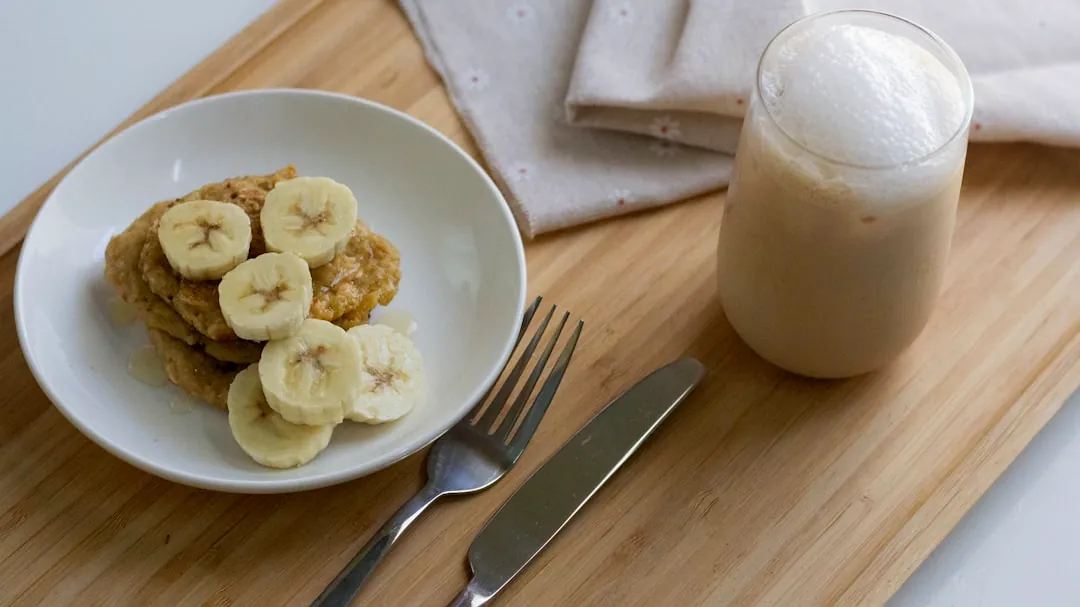
Frozen banana slices are the single easiest swap that turns a thin, watery smoothie into a thick, creamy one — without adding sugar. Use them with plain Greek yogurt and an unsweetened milk like almond to build a nutritious, flexible breakfast that fits busy mornings or a light lunch.
How frozen banana slices change texture and reduce waste
Unlike ice, frozen banana pieces melt into the blender rather than diluting the drink, so the smoothie keeps the banana’s natural sweetness and a custard-like mouthfeel. Recipes and home cooks commonly slice bananas before freezing; freezing in a single layer on a tray before bagging prevents clumping and speeds up portioning when you’re short on time.
Using frozen bananas also preserves overripe fruit that might otherwise be discarded. That makes it both a texture choice and a simple waste-reduction move for households that buy bananas in bulk or rely on them for snacks.
Assembling a balanced base: Greek yogurt, almond milk, and additive options
Plain Greek yogurt is the go-to protein boost because it adds creaminess while moderating banana sweetness; plant-based yogurts can substitute for dairy-free diets but may alter thickness. Almond milk is a light, unsweetened liquid base that keeps the smoothie from feeling heavy — swapping to oat or coconut milk changes flavor and richness, so pick the milk to match the mouthfeel you want.
Add-ins tune nutrition and satiety: ground flaxseed, chia, or oats increase fiber; nut butters add healthy fats and extra calories if you need a meal-replacement; cinnamon or vanilla deepen flavor without sugar. If the banana still dominates, a splash of citrus or pomegranate juice brightens the profile and slightly thins the blend.
Costs, prep friction, and machine limits
There are small trade-offs: freezing takes fridge space and planning, Greek yogurt or specialty protein powders raise grocery bills, and fibrous add-ins demand a stronger blender. High-speed blenders are recommended when you add kale, oats, or whole seeds; otherwise expect occasional motor strain or grainy texture.
Practical kitchen rules reduce those frictions: layer liquid first, then yogurt, frozen banana, and heavier add-ins on top to avoid clogs; don’t overfill the jar; and freeze banana slices flat before storing. These steps, used by many home cooks, cut blending time and protect appliances.
Which situations call for frozen bananas — a quick decision guide
The trade-off favors frozen bananas when you want creaminess without sugar, intend to eat the smoothie as a filling snack or light meal, need to preserve overripe fruit, or prefer a consistent texture for smoothie bowls. If freezer space, immediate convenience, or the lowest upfront cost is your priority, fresh bananas with ice or chilled milk remain reasonable.
| Situation | Choose frozen bananas | Choose ice or fresh |
|---|---|---|
| Want creamy, undiluted texture | Yes — frozen banana creates custardy consistency | No — ice will thin as it melts |
| Need quick, no-planning option | No — requires advance freezing | Yes — fresh banana + ice is immediate |
| Working within limited freezer space | Maybe — weigh benefit vs space | Preferable — saves freezer room |
| Avoiding added sugar while keeping calories moderate | Yes — pairs well with plain Greek yogurt and unsweetened almond milk | Less ideal — ice dilutes flavor, may prompt added sweeteners |
Quick Q&A
How long do frozen banana slices keep? Stored in a sealed bag after freezing in a single layer, slices keep several months; use sooner for best flavor and texture.
How do I thin a thick smoothie? Add small amounts of almond milk or a splash of citrus juice until you reach the desired pourability.
Who should avoid heavy add-ins? If you’re watching calories or need a lighter snack, skip nut butters and protein powders and stick to seeds or oats sparingly.